Reykjavik Northern Lights Season: The First and Last Weeks
Hours, prices and access verified by the Reykjavik Northern Lights Tours team — last checked 2026-09-23.
Nobody publishes an official northern lights season for Reykjavík. What
decides it is darkness, which the University of Iceland almanac times to the minute, and the
calendars the tours set themselves. At the edges, in late August, September and April, the
nights are short and the hunts run late. The northern lights tour Reykjavik small group calendars show who runs
earliest and latest.
Where does the season start and end?
In the almanac, full darkness means the sun is 18 degrees or more below the horizon. The
last night of it in spring falls in mid-April: the row for 9 April still has about an hour, the
row for 16 April none. From then until late August the sky over Reykjavík never goes fully
dark. It returns in early September: the row for 27 August has none, and the row for 3
September has full dark from 00:41 to 01:53.
The tours start a little before that and stop a little after. That is the season in
practice: late August to mid-April, with the edges thin and late. The
when to visit page gives the dark hours for every month.
Date
Full dark in the almanac
Pickups stated
Stated calendars
27 August
None; twilight ends 21:58
21:30 on one minibus
Open on one minibus since 15 August
3 September
00:41 to 01:53, about 1 hour
21:00 to 21:30
Most open, from 1 September
17 September
22:48 to 03:52, about 5 hours
21:00 to 21:30
All open
1 October
21:42 to 04:50, about 7 hours
From 20:30 on one minibus
All open
17 December
18:56 to 07:51, about 13 hours
20:30 to 21:30
All open
12 March
22:04 to 05:14, about 7 hours
20:30 to 21:30
All open
26 March
23:04 to 04:07, about 5 hours
20:30 to 21:30
All open
9 April
01:12 to 02:11, about 1 hour
21:00 to 21:30
The private car closed on 4 April
Late August: the first dark hours
In late August there is no full dark at all. On 27 August the almanac ends evening twilight
at 21:58, and the sky stays in deep twilight until morning. One minibus starts its pickups on
15 August at 21:30 all the same.
That is a thin night. You are hunting in a sky that is dark but never black, for a few
hours around midnight. Book it if late August is when you can travel, and keep a spare evening.
The other stated calendars open in September.
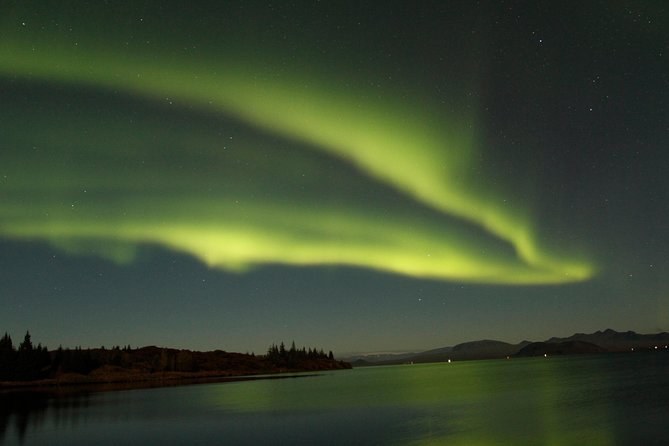
A pale green aurora arc over a lake and a line of dark trees
September and October
September is when the stated calendars open. The stargazing jeep collects from 1 September, between
21:00 and 21:30. The snowsuit night runs from 1 September, and the private car from 5
September. Full dark grows fast: about an hour on 3 September, about five by the 17th and about
seven by 1 October.
October brings the earlier pickups. The minibus with woollen blankets moves from 21:30 to
20:30 on 1 October. It also brings rain: October is Reykjavík's wettest month in the 1961-1990
normals, at 85.6 mm. More rain means more cloud to beat, so allow more nights.
Mid-season, for contrast
Around 17 December the almanac gives about 13 hours of full dark, from 18:56 to 07:51. A
hunt can start at 20:30 and still have hours of black sky ahead. January is the coldest month
in the normals, at -0.5 °C on average.
That is the contrast to keep in mind. At the edges the dark window is shorter, so each
night gives the sky fewer hours to clear, and you need more nights for the same odds.
March
March is the spring mirror of early October. Around 12 March full dark runs from 22:04 to
05:14, about seven hours. By 26 March it has shrunk to about five, starting at 23:04. The
minibus with woollen blankets keeps its 20:30 pickups to the end of the month.
March is wet too, at 81.8 mm in the normals, and cold, at 0.5 °C. Dress as for winter,
and book early in your stay.
April: the last weeks
April is the steep end. On 2 April full dark lasts about three and a half hours, from 23:46.
On 9 April it lasts about an hour, from 01:12 to 02:11, and after that the table shows none.
The minibus with woollen blankets goes back to 21:30 pickups on 1 April and runs to 18
April.
The calendars close in step. The private car stops on 4 April, the stargazing jeep's
pickups end on 15 April, and the snowsuit night is scheduled to 30 April. After mid-April you
are hunting twilight, and the free retry matters more than ever.
What if your dates fall after mid-April?
Then the almanac gives you no full dark at all, only twilight around midnight. The
snowsuit night is the one stated calendar that runs to 30 April, so it is the tour to look at
if you want to try. Keep your expectations modest and your retry alive.
For a sure sight of the aurora, go indoors. Perlan, on Öskjuhlíð, shows Áróra, an 8K
northern lights planetarium film, and opens 9:00 to 21:00. You can see it on any evening of
your trip, whatever the sky does.
What time do pickups start at the edges?
Later, because the dark comes later. The clearest example is the minibus with woollen
blankets: from 21:30 between 15 August and 30 September and again from 1 to 18 April, and from
20:30 from October to March. The stargazing jeep collects between 21:00 and 21:30 all season.
The Super Jeep runs 8pm and 9pm departures.
A late pickup means a late return. On a four-hour hunt starting at 21:30, you are back
around 01:30. The late night northern lights tours are listed together, and
the pickup points page shows where each one collects.
Weather at the edges
Month
Mean temperature
Precipitation
What it means
August
10.3 °C
61.8 mm
Mild; no full dark yet
September
7.4 °C
66.5 mm
Cool; dark hours growing fast
October
4.4 °C
85.6 mm
The wettest month; allow spare nights
March
0.5 °C
81.8 mm
Winter cold, long dark still
April
2.9 °C
58.3 mm
Drier; the dark window closes
These are the Met Office's 1961-1990 normals for Reykjavík. The shoulder months are milder
than mid-winter, which makes standing out for hours easier. They are not drier: October and
March are among the wettest. The weather by month page has all twelve.
Which tours run earliest and latest?
By their own calendars, the minibus with woollen blankets runs longest: pickups from 15
August to 18 April. The snowsuit night is scheduled from 1 September to 30 April. The
stargazing jeep collects from 1 September to 15 April, and the private car runs from 5
September to 4 April. The Super Jeep says only that sightings can occur from fall to
spring.
The others do not print a season. If you are travelling in late August or late April, book
one of the tours that states a calendar for your dates.
Useful tip. At the edges, choose the fare with the
best retry. The snowsuit night and the stargazing jeep both retry without limit, and the
stargazing jeep gives you two years.
How to plan a trip at the edges
Check the calendar before the price. In late August or late April, book a tour that
prints a season covering your dates.
Book your first evening. Your dark window is short, so give the retry room to
work.
Choose the best retry you can afford. At the edges you may need it more than once.
An unlimited retry is worth more here than in December.
Plan for a late night. Your pickup may be 21:30 and your return well after
midnight. Keep the next morning free.
Pack for winter anyway. Your night is milder than January's, but you stand still
for hours after midnight, often in wind.
Watch the cloud map from the afternoon. You have fewer dark hours to lose, so a
green map over the southwest is your cue to switch nights.
If your dates are fixed and fall in late August, you can still go. Treat it as a trip that
might include the lights, and build your days around other plans. The
best tour for your trip guide helps you choose the format.
Is a shoulder-season trip worth it?
It can be, if you plan for short nights. You get milder weather, and your hunt runs
later, around NOAA's best hours of 10 PM to 2 AM. You lose hours of darkness, so each of your
nights gives the sky less time to clear. If you can choose your dates freely, mid-September
to early October and March give you most of the dark with less of the cold.
NASA and NOAA announced on 15 October 2024 that the Sun had reached solar maximum. That
says nothing certain about any one night. Clear sky and darkness still decide it. Plan three
evenings, book the first, and read the cloud forecast each
afternoon.
The edges of the season: questions people ask
Can you see the northern lights in late August?
Sometimes, but the sky never goes fully dark in late August. One minibus starts its pickups on 15 August at 21:30; most tours start in September.
When does the northern lights season start in Reykjavík?
No official season is published. Full darkness returns in early September, and the tours that print a calendar mostly start then, one from mid-August.
When does the northern lights season end?
The almanac's last full dark falls between 9 and 16 April. The tours' stated calendars close between 4 and 30 April.
Is September a good time for the northern lights?
It is milder than winter, and full dark grows from about an hour to about seven during the month. Hunts run late and the nights are short, so allow spare evenings.
Can you see the northern lights in April?
In the first half of April, yes, but the dark window is short. After about 9 April the almanac shows no full darkness.
What time do northern lights tours start in September?
Pickups run from about 21:00 to 21:30 on the tours that state a time. One minibus moves to 20:30 from October to March.
Is the weather worse at the start of the season?
It is milder, not drier. October is Reykjavík's wettest month in the 1961-1990 normals, and March is close behind.
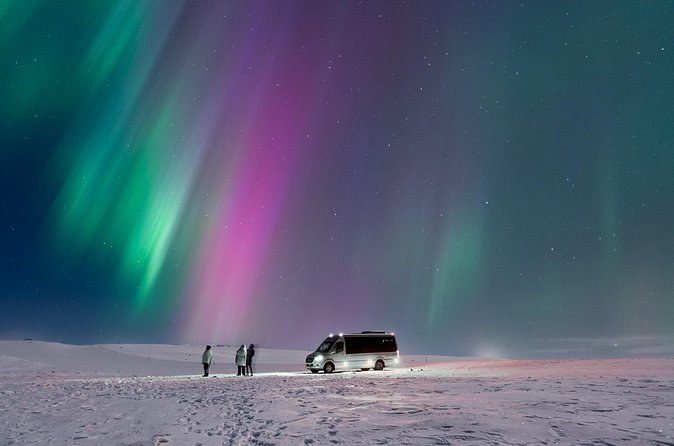
Four hours in a minibus of 19 at most, with hot chocolate, Icelandic pastries and woollen blankets; photos if conditions allow, and a free second try subject to availability.
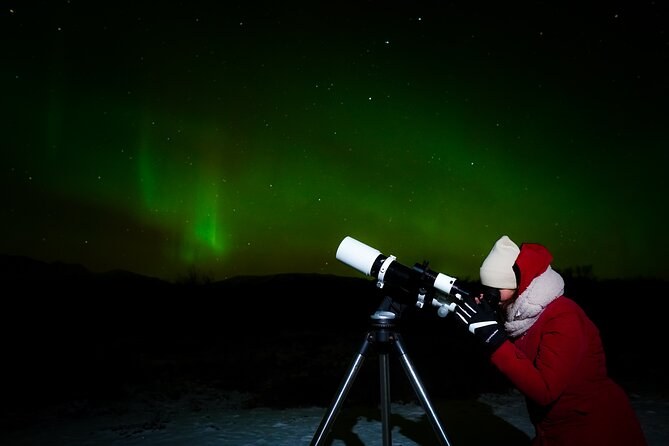
Three to five hours in a modified super jeep of 14 at most, with a stargazing telescope, homemade hot chocolate, photos of you, and unlimited retries within two years.
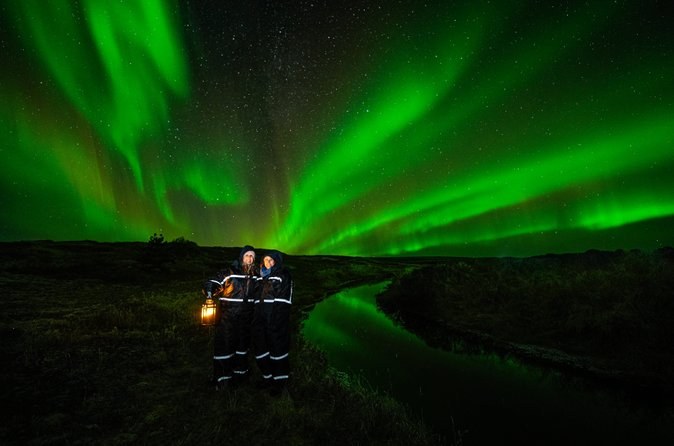
Four to six hours with warm winter jumpsuits, outdoor chairs, tripods, cocoa and cinnamon rolls, unlimited photos, and a free retry depending on availability; from age 5.