When to See the Reykjavik Northern Lights
Hours, prices and access verified by the Reykjavik Northern Lights Tours team — last checked 2026-09-23.
You can see the northern lights from Reykjavík on any night that is dark,
clear and active at the same time. Darkness is the part you can plan for, and it rules out
summer entirely. If you are timing a trip around Reykjavik Northern Lights reservation, plan for the
dark months, then keep your nights flexible.
The rule: dark, clear and active
The Icelandic Met Office puts it in one line: the aurora "requires dark and partly clear
skies". Activity is the third condition, and it is the one nobody can forecast weeks ahead.
- Dark you can read from a table. It decides the months.
- Clear you learn on the day, from the cloud map. It decides the night.
- Active you learn on the day, from the activity forecast. It decides how
much you see.
NOAA and NASA declared the sun's solar maximum in October 2024. Nobody publishes a promise for this winter, so do not plan around one. Plan around the
dark.
The tours' own calendars
Each tour sets its own season. The earliest opens in mid-August and the latest closes at
the end of April. Pickup times move with the dark, so your evening starts later at either end
of the season.
| Tour | Its own calendar | Pickup or departure |
|---|
| Northern Lights Small-Group Tour with Hot Chocolate & Photos | 15 August to 18 April | From 21:30 until 30 September and from 1 April; from 20:30, 1 October to 31 March |
| Northern Lights Small-Group Tour with Photos, Snacks & Snowsuits | 1 September 2026 to 30 April 2027 | Evening pickup |
| Northern Lights and Stargazing Small-Group Tour with Local Guide | 1 September to 15 April | 21:00 to 21:30 |
| Private Northern Lights Tour from Reykjavik | 5 September 2026 to 4 April 2027 | Evening hotel pickup |
| Northern Lights Superjeep Tour from Reykjavik | Autumn to spring | Leaves at 20:00 or 21:00 |
The coach and boat hunts run on the days their operators schedule, and you see the
available dates when you book. Whatever the calendar, a hunt only runs when the forecast gives
it a chance.
Darkness through the year
The University of Iceland almanac gives the times for Reykjavík. "Full dark" here is the
almanac's own measure: the sun 18 degrees or more below the horizon, when the sky is black.
Each row is the date nearest the middle of the month.
| Date | Sunset | Full dark from | Full dark until | Full dark |
|---|
| January 15 | 16:20 | 19:29 | 07:46 | about 12½ hours |
| February 12 | 17:51 | 20:35 | 06:50 | about 10 hours |
| March 12 | 19:19 | 22:04 | 05:14 | about 7 hours |
| April 16 | 21:04 | Never fully dark | — | None |
| May 14 | 22:34 | Never fully dark | — | None |
| June 18 | 00:03 | Never fully dark | — | None |
| July 16 | 23:23 | Never fully dark | — | None |
| August 13 | 21:52 | Never fully dark | — | None |
| September 17 | 19:48 | 22:48 | 03:52 | about 5 hours |
| October 15 | 18:09 | 20:48 | 05:37 | about 9 hours |
| November 12 | 16:37 | 19:31 | 06:52 | about 11½ hours |
| December 17 | 15:29 | 18:56 | 07:51 | about 13 hours |
From mid-April to the end of August the sky never goes fully dark. From late May to late
July it does not even reach deep twilight. In December you get about 13 hours of
full dark and in June none at all, which is why the season runs through the winter.
The time of night
NOAA's advice is that the aurora is usually best within an hour or two of midnight. The
Met Office forecasts activity for midnight too. In Reykjavík the sun is lowest about half a day
after solar noon, which the almanac puts between 13:11 and 13:42, so the darkest moment is
after midnight on the clock.
That is why the stated pickups run from 20:00 to 21:30 and bring you back late. The
drive out takes time, and the best of the night starts as you arrive. If you want to stay out
past the usual return, the Northern Lights Midnight Adventure Small-Group from Reykjavík and the other late departures are built for
it.
Book the first night
Book your hunt for the first night of your stay that looks clear. If it fails, the free
retry on most fares gives you another night, and that retry needs nights left to use. The same
goes for a weather cancellation: the operator offers you another date, and you need to still
be in Reykjavík.
Retries depend on free seats, so a stay of several nights gives the forecast more chances
to line up with you.
Found your nights?
Book the first clear one, then check what your fare gives you if the sky stays shut.
Shoulder season or mid-winter?
You have two kinds of aurora trip to choose from. In mid-winter you get the most dark:
about 13 hours of full dark around 17 December, and the sky is black by
18:56. You pay for it in cold and in daylight, with about 4 hours of it at the
solstice.
In the shoulder months you get milder nights and long days for everything else. Around
mid-September full dark lasts about 5 hours, and around mid-March
about 7 hours. The dark comes later, so your hunt runs later too.
October is the wettest month in the normals, which means more cloud to beat.
Moon and twilight
Visit Reykjavík names three things that wash the aurora out: cloud cover, moonlight and
the city's light. The moon is the one you can look up in advance. The Met Office's aurora page
gives the moonrise for Reykjavík beside its forecast.
Twilight is the other limit. At the edges of the season, full dark comes late: on
17th September not until 22:48. A
pickup at 21:30 is timed for that. In mid-winter the sky is dark by
18:56, and pickups move earlier.
Asked about timing
What is the best month to see the Reykjavik Northern Lights?
The lights need a dark, clear sky, so the dark months. The operators' own calendars run from mid-August to mid-April. December has about 4 hours of daylight and June about 21 hours, so summer nights are too bright.
Can you see the northern lights in August?
Only at the very end of it. The sky over Reykjavík does not get fully dark again until early September, and the earliest pickup calendar opens on 15 August. A late-August night can show a strong display in deep twilight, but September is safer.
Can you see the northern lights in April?
In the first half, yes. The last night of full dark falls around 9th April, and the tours' own calendars close between 4 and 30 April.
Can I see the northern lights in summer?
Not in practice. Around 21 June Reykjavík has about 21 hours of daylight and no dark night. The operators' calendars start in mid-August.
What time of night is best for the northern lights?
Around midnight, give or take two hours. That is when NOAA says the aurora is usually at its best, and the Met Office forecasts activity for midnight too.
Which night of my trip should I book?
The first night that looks clear, as early in your stay as you can. That leaves nights behind it for a free retry or a weather rebooking.
Does the moon matter for the northern lights?
Moonlight is one of the things that washes the aurora out, along with cloud and street light. A bright moon will not stop a strong display. The Met Office's aurora page prints the moonrise for Reykjavík, so you can see when it is up.
Where these facts come from
The darkness times are the University of Iceland almanac's Reykjavík table, which moves
by about a minute from one year to the next. The forecast details are the Met Office's, and
the best hours NOAA's. Each tour's calendar is its own, saved on 23 September 2026. The rest
is read 23 September 2026.
Tours that print the calendar they run
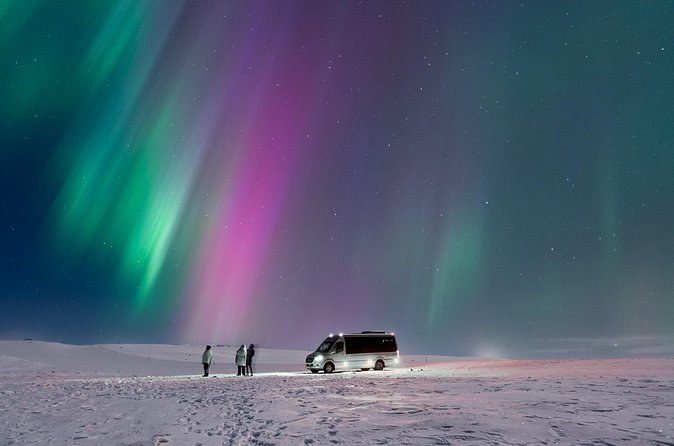
Four hours in a minibus of 19 at most, with hot chocolate, Icelandic pastries and woollen blankets; photos if conditions allow, and a free second try subject to availability.
From $166 per person
Check Availability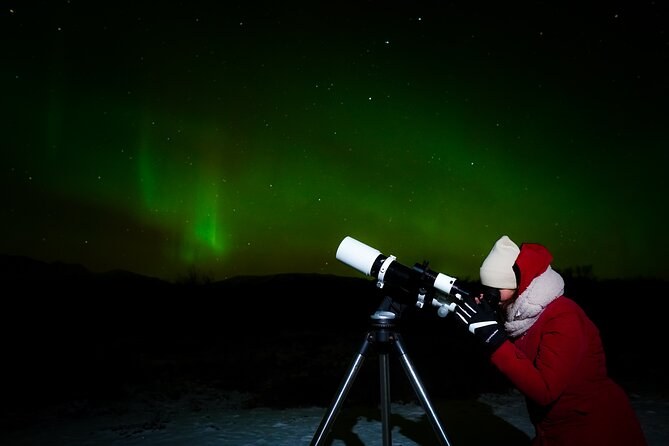
Three to five hours in a modified super jeep of 14 at most, with a stargazing telescope, homemade hot chocolate, photos of you, and unlimited retries within two years.
From $221 per person
Check Availability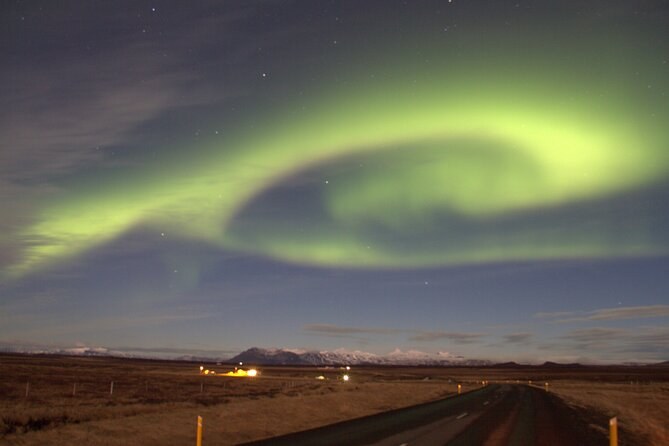
Three hours with a local guide for your own party, collected at your hotel; at least two adults, marked wheelchair accessible, and no free retry stated.
From $260 per person (minimum 2)
Check Availability