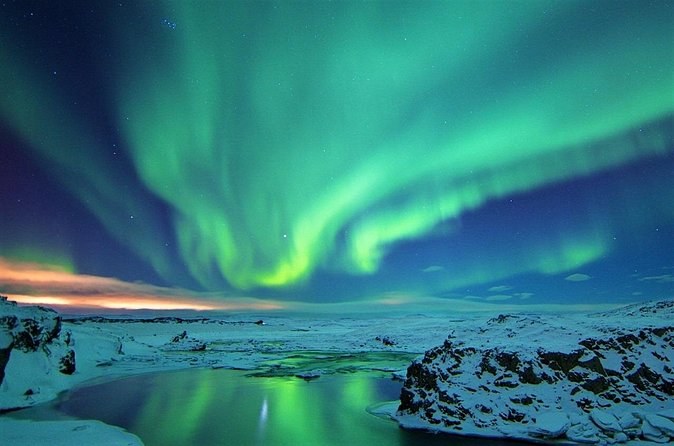
Northern Lights Bus Tour from Reykjavik with Hot Chocolate
Four hours on a coach of up to 65 from Bus Stop 12 or Bus Stop 5, with hot chocolate and Wi-Fi, and one free night more if you see nothing; from age 6.
From $84 per person
Check AvailabilityYou can see the northern lights from Reykjavík without a tour. The aurora charges nothing, and the forecast a guide reads is public. What a tour adds is judgement, a vehicle that drives to clear sky, and a second night if the first one fails. This sets the do-it-yourself night against a northern lights tour from Reykjavik, so you can tell which one your trip needs.
Strip a hunt down and it does three things. It reads the forecast in the afternoon. It gets you out of the city's light. And it waits somewhere dark until the sky performs or the night runs out. The first two you can copy. The third is where a guide earns the fare.
The Icelandic Met Office publishes the two forecasts every guide checks. One is the cloud map, where green means cloud and white means clear sky. The other is auroral activity at midnight, on a scale of 0 to 9. Visit Reykjavík names what gets in the way: cloud cover, moonlight and the city's own light. Deal with those three and you have done the planning.
On a strong night, yes, even from a street in the centre. But the street lights wash out all but the brightest displays. One traveller on the boat saw them from the harbour while waiting to board, which shows how bright they can get. It does not mean you can count on it.
The city once tried to help. In 2016 it switched street lights off from 22:00 to 23:00 in eleven neighbourhoods so the aurora could be seen better. That was a single night, not a policy, so expect the lights to be on.
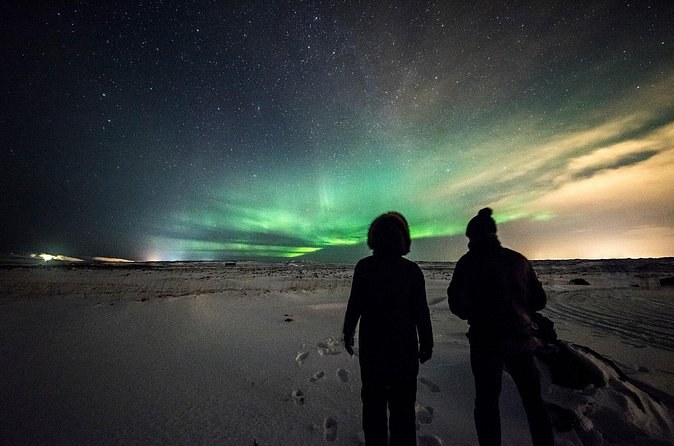
The city has two dark edges you can reach without a car. Grótta, at the tip of Seltjarnarnes, faces the open sea to the west. It is an island joined to land by a narrow spit that goes under water at high tide, so check the tide before you cross. From 1 May to 15 July it is closed for nesting birds, which is outside the dark months anyway.
The other is Öskjuhlíð, the wooded hill with Perlan on top. The trees block some street light, but you are still inside the city's glow. The top spots page has both, with the directions the hunts drive.
A hire car widens the choice. Out of town, away from the street lights, the sky is far darker than anywhere in the city. NOAA's advice is the same: get away from city lights. You can follow the cloud map and turn round when it closes in, as a guide would.
The costs are real, though. You drive winter roads at night, often on ice, after a full day. You need to know where you can pull off safely, which is harder in the dark than by day. And a car in the city is still a car you have to park. If you are not used to winter driving, a northern lights bus tour from Reykjavik leaves the road to someone who drives it every night.
Start with the cloud map in the afternoon. Look for white over the direction you can reach, and check it again an hour before you set off. Then look at the activity number, but do not read it as a promise. A high number under cloud shows you nothing; a modest number under clear sky can be a good night.
NOAA says the best aurora is usually within an hour or two of midnight, between 10 PM and 2 AM local time. The same Met Office page gives moonrise for Reykjavík, since moonlight is the other thing that washes the sky out. The forecast guide walks through the map and the numbers step by step.
Four things. The first is judgement: a guide reads the same forecast every evening of the season and knows the roads it points to. The second is the drive, done by someone who knows the roads in the dark. The third is the photos. Most small groups take them for you, and some lend tripods and help with your settings.
The fourth is the retry. If you go alone and see nothing, you have spent an evening. If you go on a fare with a free retry, you have a second night for nothing. On a short trip that is the strongest argument for a tour. The visitor guide sets out what each fare covers.
The boats sit between a walk and a tour. You walk to the Old Harbour, pay $86 to $105, and sail onto the bay for two hours with the city behind you. The Old Harbour cruise includes warm floatable overalls and a free re-sail if you see nothing. The other boat has a café, a restroom and observation decks.
No pickup, no car and no late drive home: for a night without a tour that still has a second chance, a boat is the closest thing. It cannot chase a gap in the cloud, so check the map before you book. See the northern lights boat tours side by side.
The weather by month shows how cold and wet each month runs, which is what decides the road.
More than you think. You stand still for long spells, often in wind, and cold creeps in from the ground. Wear a warm hat, gloves, thick socks and layers under a windproof shell. A hot drink in a flask helps. Most small groups hand out hot chocolate; alone, you bring your own.
For photos, a tripod matters more than the camera. A phone on a small stand, set to its night mode, catches more than your eye does. Carry a head torch with a red light, so you can see your kit without spoiling your night vision or anyone else's.
When you have the three things a tour sells: a car you are happy to drive at night, time, and the patience to read a forecast. With four or five evenings, you can go out only on the clear ones and skip the rest. A tour's retry matters less when you can pick your nights.
Going alone also suits you if you want to stay put. A hunt moves on when the guide decides. On your own, you can stand at one dark spot for three hours, or leave after twenty minutes. If you are travelling with a photographer who wants long exposures from one place, that freedom is worth a lot.
| Option | Cost | Darkness | If you see nothing | Getting there | Suits |
|---|---|---|---|---|---|
| A city street | Free | Street lights | Nothing lost but time | On foot | A strong night you did not plan for |
| The city's dark edges | Free | Darker, city glow behind | Nothing lost but time | Walk, bus or taxi | A short trip on a clear night |
| Your own car | Car hire and fuel | As dark as you drive | An evening spent | You drive at night | Confident winter drivers |
| A boat | $86 to $105 | The bay, city behind | A free re-sail | Walk to the quay | Families and short nights |
| A coach hunt | $84 to $85 | Out of town | One more night free | Bus Stop 12 or 5, or pickup | The lowest fare with a guide |
| A small group | $114 to $221 | Out of town | None stated up to unlimited | Hotel or a set stop | Photos and a smaller group |
Go alone if you have a car, winter driving experience and several clear evenings. Take a tour if you have one or two nights, no car, or no wish to drive icy roads at midnight. Either way, the how to see the northern lights post has the basics in one place.
Four hours on a coach of up to 65 from Bus Stop 12 or Bus Stop 5, with hot chocolate and Wi-Fi, and one free night more if you see nothing; from age 6.
From $84 per person
Check Availability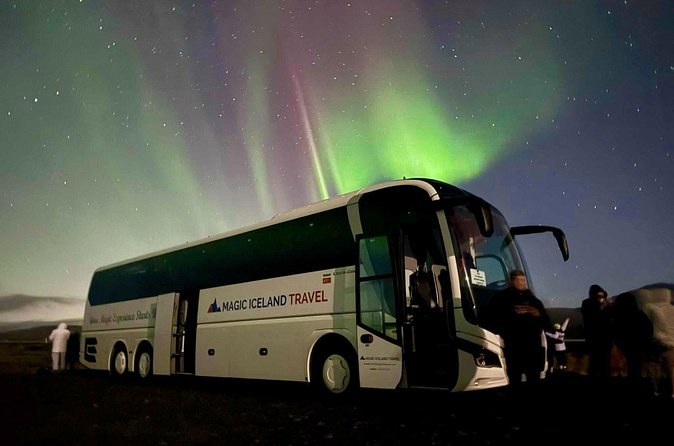
Four hours on a coach of up to 57 with Wi-Fi and a restroom, hot chocolate, and tips for photographing the lights on your phone; a free retry subject to availability. From age 6.
From $85 per person
Check Availability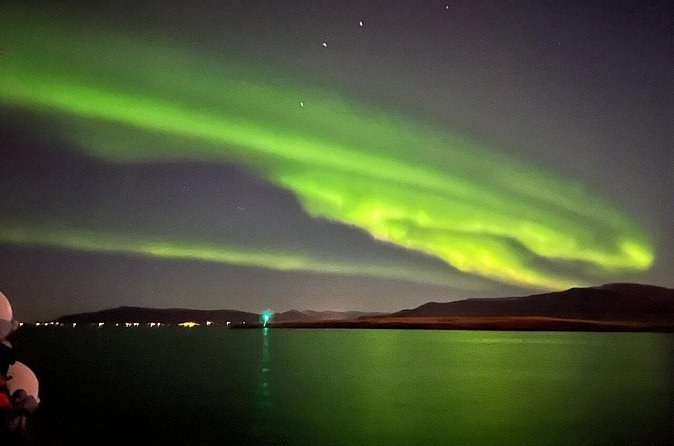
Two hours on the bay from the Old Harbour, with observation decks, a restroom and Wi-Fi on board; drinks and snacks are sold. Arrive 30 minutes early.
From $86 per person
Check AvailabilityNext: See what the fares buy in the price guide, or pick a tour in the best tour for your trip. Every fare sits side by side on Reykjavik Northern Lights Tours.