Reykjavik Northern Lights Facts That Will Surprise You
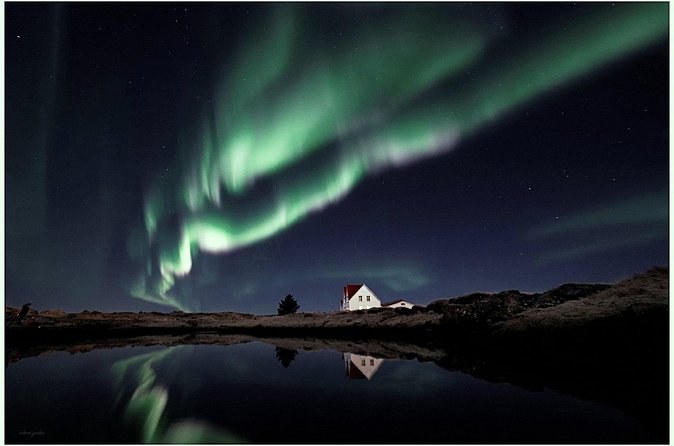
The short answer. The most surprising facts about the northern lights over Reykjavík are about time and light, not magic. The forecast is set for midnight, the darkest point of the night falls after one in the morning, and the city once switched off its street lights to help. Here is what a first-timer rarely knows before booking a northern lights tour from Reykjavik.
1. Nobody can sell you a ticket to the aurora
The lights have no gate, no owner and no opening hours. Every fare you see is for a seat, a guide and a plan. The listing that says “sighting guarantee” means a free re-sail, not a promise: the boat from the Old Harbour offers you tickets for another night if you see nothing. No fare can promise the sky itself.
2. The official forecast is for midnight
The Icelandic Met Office shows auroral activity at midnight, on a scale of 0 to 9. It is a single number for the whole night, and it says nothing about cloud. That is why operators check the cloud map before they look at the activity figure.
3. On the cloud map, green is bad news
Most people read green on a weather map as good. On the Met Office cloud forecast, green areas are cloudy and white areas are clear. So you are hunting for white. How to read the forecast walks through both maps.
4. There are two different scales, and they are easy to mix up
The aurora forecast runs from 0 to 9. The Met Office also records cloud cover on a scale of 0 to 8, where 8 is overcast. They measure different things, and a 3 on one says nothing about a 3 on the other.
5. December has about four hours of daylight, June about twenty-one
Around 21 December the sun is up in Reykjavík for about 4 hours. Around 21 June it is up for about 21 hours. The almanac of the University of Iceland gives the times to the minute.
6. For four months the sky never goes fully dark
Full darkness, with the sun at least 18 degrees below the horizon, stops in mid-April and does not return until late August. From late May to late July there is not even ordinary twilight at night. That is why no hunt runs in summer: the aurora is still there, but the sky is too bright to show it.
| Mid-month | Full darkness a night |
|---|---|
| September | about 5 hours |
| October | about 9 hours |
| November | about 11 hours |
| December | about 13 hours |
| January | about 12 hours |
| February | about 10 hours |
| March | about 7 hours |
7. The middle of the night comes after one in the morning
Solar noon in Reykjavík falls between 13:11 and 13:42 on the clock, all year. So the middle of the night, when the sun is lowest, falls after 01:00, not at midnight. NOAA says the best aurora usually comes between 22:00 and 02:00, which is why late hunts pay off.
8. The city once switched off its street lights for the aurora
In 2016, on a night with a strong forecast, Reykjavík turned off its street lights between 22:00 and 23:00 in a list of named neighbourhoods, so that the northern lights could be seen better and more widely. It was a one-off, not a policy, but it shows how much the city light matters.
9. Your camera sees more than you do
On a weak night the aurora can look like a grey cloud to the eye and come out green on a long exposure. Sean_D says it straight: you see more on a camera than in person. On a strong night you will not need the screen.
10. Some retries last two years, and one lasts a lifetime
A free retry is not always one extra night. The super jeep with a telescope allows unlimited retries within two years. The 4x4 minibus with pastries and cocoa offers free re-booking for life. The small-group hunt with guide photos has no limit on retries, though the ticket belongs to the person who booked it. The visitor guide compares every retry rule.
11. Reykjavík winters are milder than you think
The 1961-1990 averages put January at -0.5 °C and December at -0.2 °C. The cold you feel comes from standing still in the wind at midnight, not from deep frost. The weather by month lists every average.
12. December gets about twelve hours of sunshine in the whole month
The same averages give December 12.1 hours of sunshine across all 31 days. October is the wettest month, at 85.6 mm of precipitation. Wet months are cloudy months, which is one reason a retry matters more than a date.
13. The solar maximum has already been declared
NASA and NOAA announced on 15 October 2024 that the sun had reached the solar maximum of Solar Cycle 25. No official forecast says what that means for any single winter, so treat claims about a record season with care.
14. You can watch the aurora indoors on a cloudy night
Perlan shows Áróra, an 8K northern lights planetarium film, and is open from 9:00 to 21:00. It is no substitute for the sky, but it is a good way to learn what you are looking for before a hunt. The best places to watch lists it with the city’s dark edges.
15. The hunts start in August, not in winter
Winter is the word everyone uses, but the calendars begin earlier. The minibus with pastries collects from 21:30 as early as 15 August, and the super jeep with a telescope runs from 1 September to 15 April. By late August the almanac already gives the city a few hours of real darkness again, and it grows by several minutes every night. Autumn hunts are milder, and the nights are shorter, so the hunts start later in the evening. Spring works the same way in reverse, until full darkness ends in mid-April.
16. A “small group” can mean 14 or 28
The words on a listing do not fix the size. The super jeep with a telescope caps its group at 14. The smaller-bus hunt is sold as a small group and states a maximum of 28. The coaches take up to 65. If the size of the group matters to you, read the stated maximum, not the title.
17. Some free retries are taken on a different vehicle
A retry is not always a repeat of the night you booked. On the smaller-bus hunt the free retry is on a big bus. On the camera-teaching hunt it is on the operator’s northern lights bus tour. The lava tunnel night offers a retry for the northern lights part only, not the tunnel. Read the retry line to the end before you book.
18. The boats carry the biggest crowds
A boat can feel roomy and still be full. The boat from the Old Harbour takes up to 150, the cruise with a café up to 75. Ronald_H found the boat very crowded, with strangers sharing tables below deck. The open decks give everyone a view, so the numbers matter less outside than in.
- Check the cloud map first, then the activity number.
- Book an early night in your stay, so the retry has time to work.
- Plan to be out after midnight, when the sky is darkest.
When to go turns these facts into a month-by-month plan.
Hunts that explain the sky as they chase it
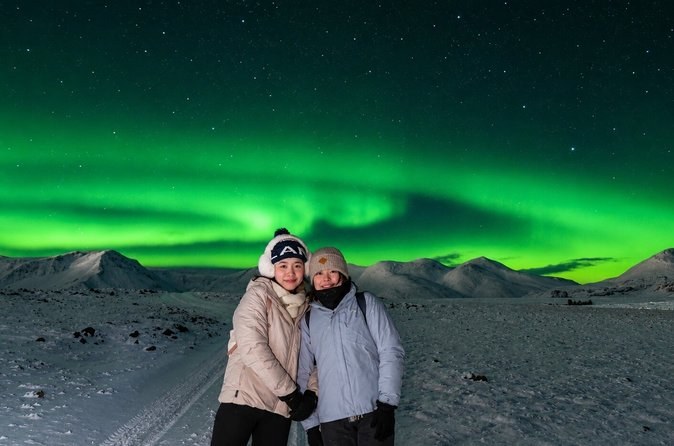
Northern Lights 4x4 Tour with Pastries and Cocoa from Reykjavik
Four hours in a 4x4 minibus of 16 at most, with hand warmers, pastries and cocoa, photos by the guide, and free re-booking for life if the lights stay away.
From $174 per person
Check Availability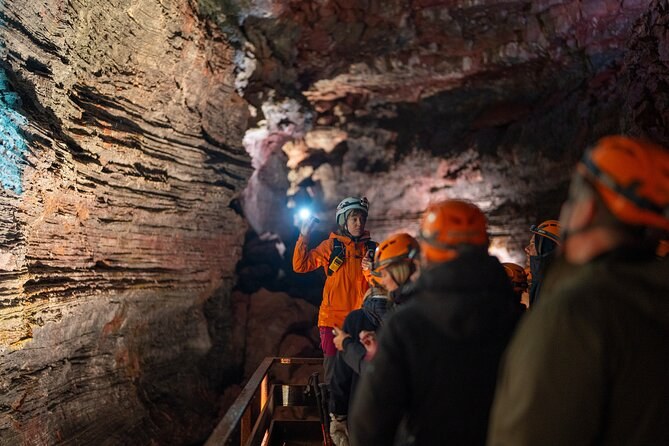
From Reykjavík: Evening Lava Tunnel Tour and Northern Lights Tour
Five hours: an hour in a lava tunnel with a certified caving guide, helmet and torch, then the hunt with cocoa, a blanket and photos. The retry covers the lights part.
From $210 per person
Check Availability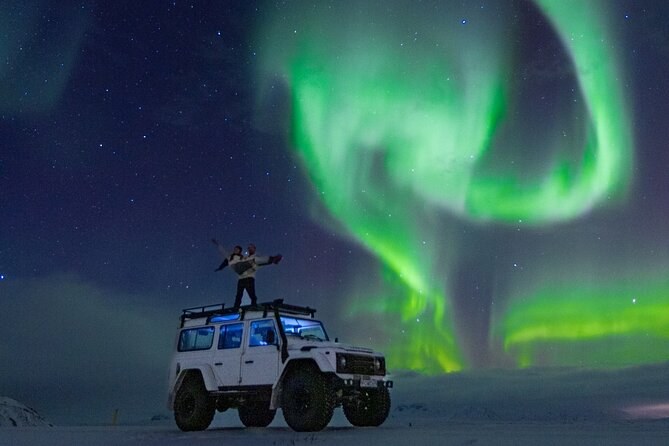
Reykjavik Private Northern Lights Tour with Pro Photographer
Three to four hours for a group of up to four with a photographer-guide: at least five photos with the lights if they show, and help with your own camera.
From $1,618 per group (up to 4)
Check AvailabilityNext: Take the forecast, the dark and the retry with you when you choose a night. Every fare sits side by side on Reykjavik Northern Lights Tours.