A Reykjavik Northern Lights Night, Hour by Hour
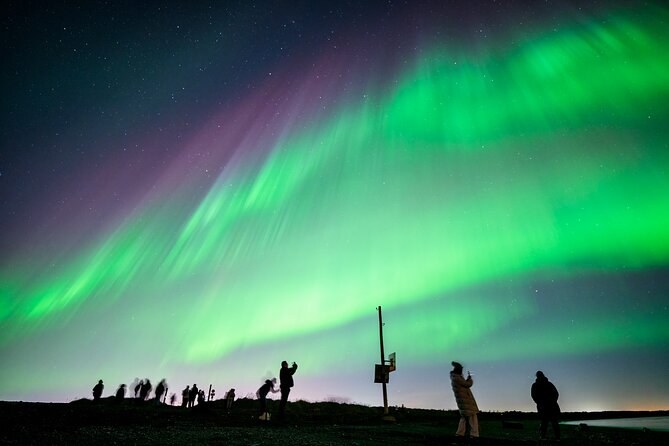
The short answer. Whether you book a northern lights bus tour from Reykjavik or a minibus of 18, the night follows one shape: a message in the late afternoon, a pickup window from about 20:30, a drive out of the city light, several stops under the sky, and a ride home that often ends after midnight. The boats run the same night in two hours on the water.
| Stage | When | What to do |
|---|---|---|
| The go or no-go message | Late afternoon, 17:00 to 18:30 | Check e-mail, spam and texts |
| Pickup | From about 20:30 | Be outside at your stop on time |
| The drive out | The first half hour or more | Listen to the plan for the night |
| The stops | Most of three to five hours | Watch, warm up, watch again |
| Photos and cocoa | Once the lights appear | Stand where the guide puts you |
| The ride back | Often after midnight | Check your pockets for gloves |
Late afternoon: the go or no-go message
The night starts hours before pickup. Operators look at the cloud map and the activity forecast and decide whether to run. The super jeep with a telescope sends its message at 18:30 through the booking system. The minibus with pastries e-mails its decision in the afternoon. For the Super Jeep hunt you call around 17:00 and ask. Brian_Q, on the small-group hunt, heard early in the afternoon that the night was off, with time to plan something else.
What you do: check your e-mail and your spam folder before you get ready, and keep your phone charged. Notice can be short. Elaine_S heard four hours before the start that the Super Jeep would not run. How the forecast works shows what the operators are reading.
From 20:30: the pickup window
Stated pickup times sit between 20:30 and 21:30, and they move with the season. Pickup itself takes a while: collection starts about 30 minutes before the tour does, because the vehicle makes a round of the city. Central hotels are often served from a numbered tour bus stop nearby, since buses cannot stop everywhere downtown.
What you do: be outside at your stop a few minutes early, dressed for the whole night. If nobody comes, call. Alan_W waited while the jeep came 35 minutes late. The pickup points names every stop by street.
The drive out of the city light
NOAA’s advice for anyone chasing the aurora is short: go out at night and get away from city lights. The first part of the hunt does exactly that. There is no fixed destination. The guide picks a direction from the forecast and the cloud, and the plan can change on the way. Many guides use the drive to explain what the aurora is and what to look for, since a first display can look like a pale cloud.
What you do: sit near the front if you get carsick, and ask the guide what the plan is. Where the hunts go describes the directions they choose from.
The stops: out, watch, back in
Most of the night is spent at a few stops, often at the side of a quiet road or on a patch of open ground. You get out, let your eyes adjust, watch the northern sky, and get back in to warm up. On a night of snow showers Brian_Q counted four or five stops before a clear window opened. Shahana_B’s guides on the big-coach hunt tried three different spots, and the aurora showed up on their cameras; expect a lot of waiting around and watching the sky.
What you do: give your eyes time in the dark, and keep your phone screen dim. Go to the toilet before you leave the city: facilities are very limited outside town, and Amanda_O found none at all at the stops. Some coaches carry a restroom on board.
Photos and cocoa
When the lights appear, the guide becomes a photographer. Many fares include photos of you with the aurora behind you; others teach you to take your own. The camera-teaching hunt helps you set up your own camera or phone, and the small group with jumpsuits brings tripods. Photos come only if the lights do: the minibus with pastries promises them if conditions allow.
Hot chocolate is the other ritual. Most hunts hand it round, often with pastries or biscuits. The super jeep with a telescope adds stargazing on a clear night with no aurora, which turns a quiet sky into something to look at.
- Layers, including a hat, gloves and a scarf.
- A charged phone and a small power bank.
- A snack, since dinner is not in most fares.
- Cash or a card for tips, which are up to you.
The ride back, often after midnight
Most hunts are listed at three to five hours, and the guide may stay out longer when the forecast says a chance is coming. Francesca_C was out until after one in the morning. Alina_S left at 22:00 and was back at the hotel at 04:00. You are dropped where you were collected.
What you do: plan a late start the next morning, and do not book an early Golden Circle day after a hunt. If you saw nothing, ask about the retry before you step off. The visitor guide shows what each fare offers after a night with no lights.
If the night is a quiet one
Some nights run and the sky stays shut, or shows only a faint glow. That is not a failure of the guide; it is the aurora. What happens next depends on your fare. Most hunts let you come again free on another night, subject to availability, and a few never limit the retries. A performed tour is not refunded, so the retry is your second chance.
A quiet night can still be a good one. Nicole_N had a weak display on the late minibus, but the guide stopped at several spots and filled the evening with facts about the lights. The super jeep with a telescope turns a clear, quiet sky into a stargazing session. Before you step off, ask the guide how to book the retry: some operators rebook by e-mail, and seats on popular nights go first.
Who else is on board
The vehicle sets the size of the group, and the size of the group sets the pace of the stops. A coach carries up to 57 to 65 people, and everyone gets out and back in together. Small groups cap at 14 to 28, which means a quicker exit at each stop and a guide who can hear your question. Super Jeeps travel in convoy with other vehicles, so you may share the stop with a few more. None of them changes the sky; they change how the waiting feels. The FAQs answer the common questions about group size and toilets.
The same night on the water
The boats compress all of this into two hours. You walk to the Old Harbour, the guide explains the science on land, and the boat sails out onto the bay, away from the city light. There is no drive and no pickup, and a heated lounge sits a few steps from the deck. The boat from the Old Harbour hands out warm overalls. What a boat cannot do is move to a gap in the cloud, which is why boat or land is the real choice for a first night. When to go covers the months.
Hunts that make a night of it
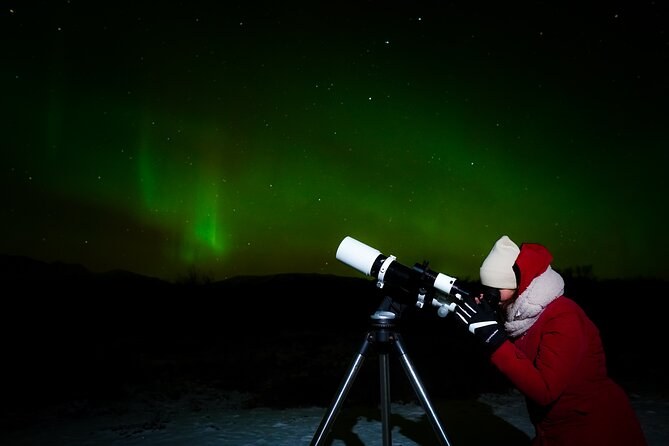
Northern Lights and Stargazing Small-Group Tour with Local Guide
Three to five hours in a modified super jeep of 14 at most, with a stargazing telescope, homemade hot chocolate, photos of you, and unlimited retries within two years.
From $221 per person
Check Availability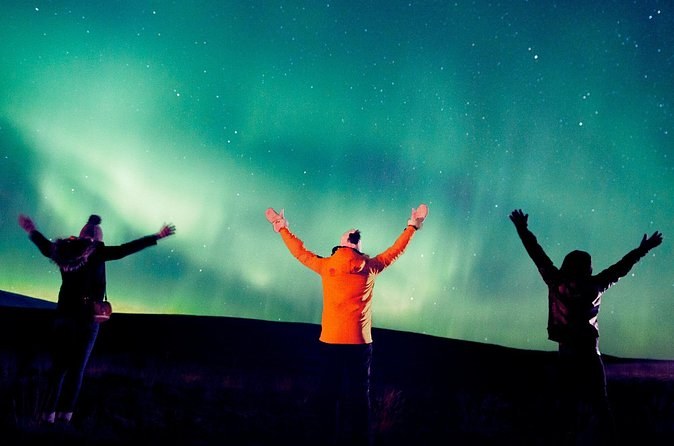
Northern Lights Small Group Tour from Reykjavik with Free Photos
Four hours with a guide who helps you photograph the lights on your own camera or phone, snacks and hot chocolate included; 21 at most.
From $134 per person
Check Availability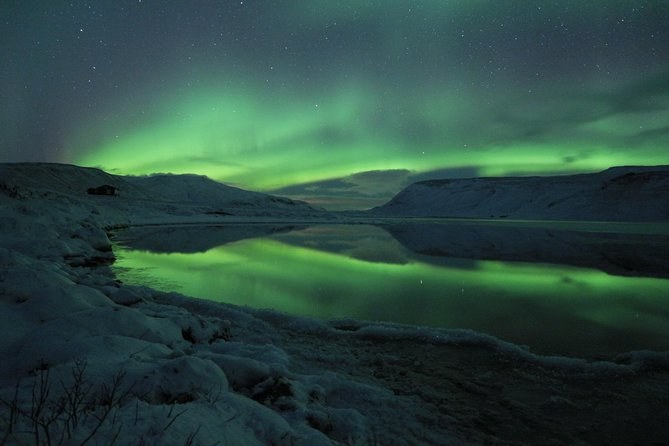
Northern Lights Midnight Adventure Small-Group from Reykjavík
Three to five hours in an air-conditioned minibus of 18 at most, with hot chocolate and free photos, a free retry if you see nothing, and a free reschedule if weather cancels.
From $135 per person
Check AvailabilityNext: Pick the night, then pick the vehicle that suits it. Every fare sits side by side on Reykjavik Northern Lights Tours.